
AIOps
Why do so many IT operations keep putting out fires?
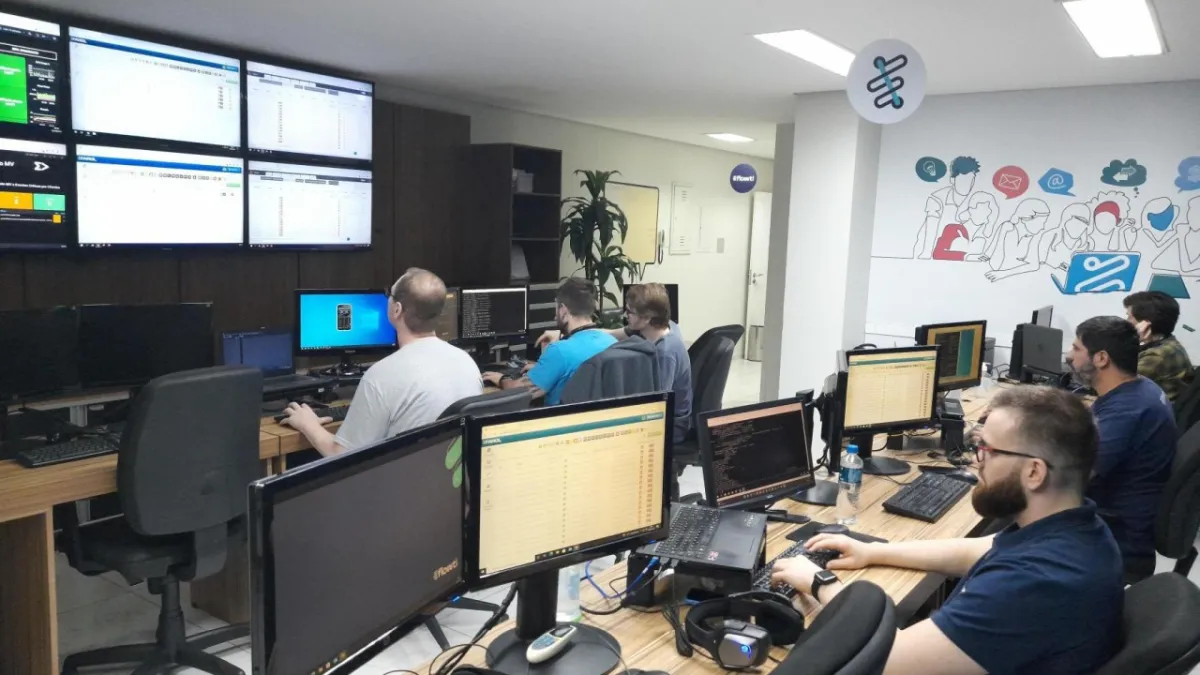
The problem with modern operations is rarely a lack of tools. The real challenge is turning information into fast, intelligent decisions.
For many years, the evolution of IT operations seemed to follow a fairly clear path. As new tools emerged, we believed operational problems would shrink in the same proportion.
We monitored more servers, more applications, more network devices, more cloud services.
We built more complete dashboards, automated routines, and expanded visibility into the infrastructure.
It was natural to imagine that all this investment would result in increasingly stable, predictable, and efficient operations. Reality, however, proved more complex.
Over the past few years, following infrastructure and operations projects in large organizations across different sectors, I began to notice a pattern that repeated itself often. Regardless of the segment, the size of the company, or the technologies adopted, many teams lived with the same feeling: that of permanently putting out fires.
I am not talking about a lack of tools. Quite the opposite.
There has never been so much capacity to monitor IT environments as there is today.
Most large organizations already have platforms capable of tracking servers, networks, applications, databases, cloud environments, and user experience in real time. The volume of information available is enormous and keeps growing.
Why so many operations still put out fires
Even so, all it takes is talking to operations managers to notice that some questions keep coming up.
Why do critical incidents still cause so much impact?
Why do some teams spend a good part of their time analyzing alerts instead of solving problems?
Why do users still discover outages before IT itself in certain situations?
These questions led me to reflect on an important change that has taken place in technology operations in recent years.
When monitoring stops being the differentiator
The challenge is no longer seeing the infrastructure.
Today, the challenge is quickly understanding what really deserves attention. This difference seems small, but it completely changes how an operation should evolve.
For a long time, the success of a monitoring initiative was measured by the number of assets tracked or the breadth of the data collected. The greater the coverage, the better the operation seemed to be.
That reasoning made sense when the problem was a lack of information. Today, however, we live in a different reality.
Information is hardly the scarcest resource in an IT operation. In most corporate environments, it exists in abundance.
Operational context in incident response
What is missing is context.
When a relevant incident occurs, different platforms generate events, metrics, logs, notifications, and indicators almost simultaneously. Each one offers part of the answer. The challenge becomes connecting that information, separating symptoms from causes, and quickly identifying what really requires a decision.
In practice, that is exactly the moment when many operations lose time. Not because they lack qualified professionals. Nor because they use inadequate tools.
But because they still depend on an essentially manual process to turn a large amount of data into understanding of the problem.
There is a phrase I have found increasingly true.
We live in the age of data abundance and context scarcity
This may be one of the biggest changes IT operations are going through.
A few years ago, a team celebrated when it managed to monitor practically the entire infrastructure.
Today, monitoring is no longer a differentiator. It has become merely the starting point.
The real differentiator lies in the ability to quickly interpret what is happening. The organizations that evolved the most realized this.
They continue investing in monitoring, but understood that visibility, on its own, does not solve the problem.
They also started investing in integration between platforms, in standardizing processes, in automating repetitive activities, and, above all, in improving the quality of the information delivered to the teams responsible for decision making.
This may be the most interesting aspect of this transformation.
When we talk about intelligent operations, it is common to immediately imagine Artificial Intelligence, sophisticated algorithms, or new platforms.
These resources certainly play an important role.
But no technology can make up for an operation based on poorly structured processes, fragmented information, and decisions made without context.
What defines a mature operation
Mature operations are not those with more dashboards.
Nor are they, necessarily, those that monitor more assets. In my perception, they are those that can quickly answer the questions that really matter.
What happened?
What is the probable cause?
What is the impact on the business?
Who needs to act?
Which information will allow that team to solve the problem faster?
Answering these questions consistently reduces waste, shortens diagnosis time, improves collaboration between teams, and increases the reliability of the operation.
Notice that, at no point, are we talking about replacing tools. We are talking about evolving how they are used. This change of perspective helps explain why organizations using similar solutions show completely different levels of operational maturity.
The tools may even be similar. The processes, the integration between them, and the ability to turn data into decisions are not.
Perhaps that is exactly why so many operations still have the feeling of always chasing problems. Not because they monitor too little. But because turning information into intelligence remains a much bigger challenge than simply collecting data.
I believe this will be one of the most important discussions of the coming years.
As environments become more distributed, hybrid, and dynamic, the ability to quickly interpret the context of an incident will become as important as the ability to detect it.
And this evolution does not depend on technology alone. It depends on people, processes, integration, and a different way of seeing the operation.
It is about this transformation that I intend to talk in this series of articles that I will publish in this space.
In the next articles, we will explore some of the challenges that arise from this new reality, such as the overload caused by excess alerts, the difficulty of identifying root causes, the evolution of observability, the reduction of MTTR, and the real role of Artificial Intelligence in IT operations.
Because, in the end, I believe intelligent operations are not those that collect more data. They are those that can make better decisions with the data they already have.
Food for thought
When analyzing your operation today, it is worth asking a few simple questions:
- Are the most critical incidents usually identified by the tools or by the users?
- Does your team spend more time understanding the problem or solving the problem?
- If the volume of monitored applications and services doubled tomorrow, would the operation remain efficient or would it just receive twice as much information to analyze?
The answers may reveal more about the operation’s maturity level than any dashboard.
About the author
Paulo Florêncio de Menezes is an entrepreneur, partner, and co-founder of companies such as Target Solutions, BiPTT, and ARGUS.
He holds a degree in Data Processing from the Federal University of Amazonas (UFAM), an MBA in Business Management from Fundação Dom Cabral (FDC), and a Professional Master’s in Economics from Fundação Getulio Vargas (FGV).
In his Master’s research, he developed the IBEOP-IA (Brazilian Index of Potential Occupational Exposure to Artificial Intelligence), investigating the potential exposure of Brazilian occupations to AI capabilities by combining occupational data, artificial intelligence patents, and natural language processing techniques.